Showing posts with label Farmers Markets. Show all posts

Sunday, 8 July 2012

My Three Favorite Tips for Staying Connected to your Food While Living in the City


Farmers Market in Montenegro

As a University student, I often find myself sitting indoors and in front of my computer. While studying, the closest I get to a farm is the Saturday market. Because it is important for me to remain connected to my food, I’ve reflected on how to do so when stuck in the city; here are three ways to do so. If you have any of your own tips, please post them here.

1. Be creative with space.

Plants can grow almost anywhere; many will grow just fine in your house or apartment. Garlic is the perfect example. If left in storage, even in your cupboard, garlic cloves begin to sprout on their own. Although this isn’t the recommended method of growing them! All you have to do is bury the clove in soil in a small container and a few months later you will start to see your garlic plant sprout. Many people are extremely creative with space in the city. One example is the art of window gardening. Window gardens are a great place to grow herbs and spices for cooking. Another example of a creative use of space is the rooftop garden. Rooftop gardens are the answer to finding space for gardening even in the most confined living arrangements, such as high-rise apartment complexes; because these spaces are often communal, they also become a great way to share gardening tips with your neighbour! You may not be able to grow your entire meal on the roof, but many plants are content with such a space. Some examples include: garlic, chives, basil, arugula, swiss chard, tomatoes, small pepper varieties, or radishes.
Chicago Rooftop Garden (photo from http://www.growingagreenerworld.com)

2. Read food labels.

We don’t always have the luxury or the time to graze solely at farmers markets. But, if eating local and in season is important to you, read your food labels to see where your food was produced. I’ve often made the mistake of assuming that if a plant can grow in Canada, that finding it in the market means it must be locally grown. But, that is not always the case. Take garlic for example. Garlic is a crop that grows well in Canada, but most garlic I find in the store is shipped in from China! Because some stores and markets have yet to reveal product origin information, it is often necessary to shop around for stores that do.
Estonian Wild Mushrooms
3. In one word: seasonality

Living in Canada, it is hard for me to ignore seasons! In other parts of the world, seasons are not so clear-cut. No matter where you are, plants, believe it or not, are very in-tuned to seasonality (when I talk about seasonality I’m referring to the natural growth cycles of plants). So, knowing what time of year to start planting a food will make a difference in what grows well in your home garden. Being attentive to seasons, will also allow you to organize your garden so you can enjoy your own food year-round. If you buy seeds, the package will often display the best time of year to plant local varieties. If you go to farmers markets, ask your farmer. My best advice on when to plant seeds has come directly from farmers who are highly in tune with plants' seasonal needs.

If you know what foods grow in what season you can also begin to enjoy wild edibles. Mushrooms are a great example. Many mushrooms grow wild and their harvest is often regulated and seasonally in nature areas. Some city-dwellers have taken to the art of foraging in the heart of urban areas. You’d be surprised how many edible greens are growing under the guise of weeds! Some examples include, dandelion leaves, sorrel, and mustard greens. Remember to check whether or not urban foraging areas are chemical-free. Also, wild foods should not be consumed without consulting with an expert. 
Wild Young Morel Mushrooms (photo from http://thegreatmorel.com) 

Wednesday, 3 August 2011

Local vs Global Pizza


While reading the latest issue of Audubon magazine, I was inspired by a project conducted by San Francisco university students curious about the sources of their food. These students found some tacos at a local food truck and then traced the origins of everything that went into each taco.  To their surprise, these California tacos were made from ingredients as far as Northern Thailand.  This got me thinking, even in areas where we can find an abundance of locally grown food, we are often tempted by price, habit, convenience, or curiosity to purchase food from global sources.


To understand our ‘eating’ footprint, my partner and I challenged ourselves to make a meal from as many local ingredients as possible and compare the result to a more typical meal derived from conventional ingredients.  We chose a meal we both enjoyed while allowing us to get creative: Pizza.  Because some of the more common products available at our farmers market (like sweet potatoes, onions, and fresh fruit) don’t necessarily belong on your typical pizza, we thought it would be an interesting challenge.

We chose the local ingredients based on what was available at the weekly farmers market and compared this “Local Pizza” to one of our conventional Friday night pizzas, a.k.a. “Global Pizza” – all of which were homemade.  We made two local pizzas but I only did the math on one.  To get the distances of the grocery store ingredients, I checked product labels and e-mailed the companies.  For our local pizza, I talked to farmers to find out where their farms were.

Here is what we found:

Approximately how far did our ingredients travel?

(Distances are best possible approximations, and I’ve used miles considering I’m currently in the U.S.A.)


To give you an idea of the cumulative distance the ingredients in our Global Pizza traveled, it was almost equal to flying across Canada three times (from Vancouver to St. Johns Newfoundland), or making the trip between Seattle and Miami more than three times! Assuming the trucks that brought our ingredients get 15 miles per gallon, our Global Pizza used 574 more gallons of fuel than our Local Pizza. Although this is a simplification, it gives us a general idea.


Here is the breakdown:

Mozza, Mushroom, Olive "Global Pizza"
Global Pizza 

997 miles
Mozzarella cheese: La Farge, Wisconsin

879 miles
Mushrooms: Kennett Square, Pennsylvania

4,565 miles
Olives: Product of Spain

2,296 miles
Pizza Sauce (organic, canned): San Joaquin Valley, California


Local Pizza 
Red pepper, Tomato, Ricotta-like Cheese "Local Pizza"

12.8 miles
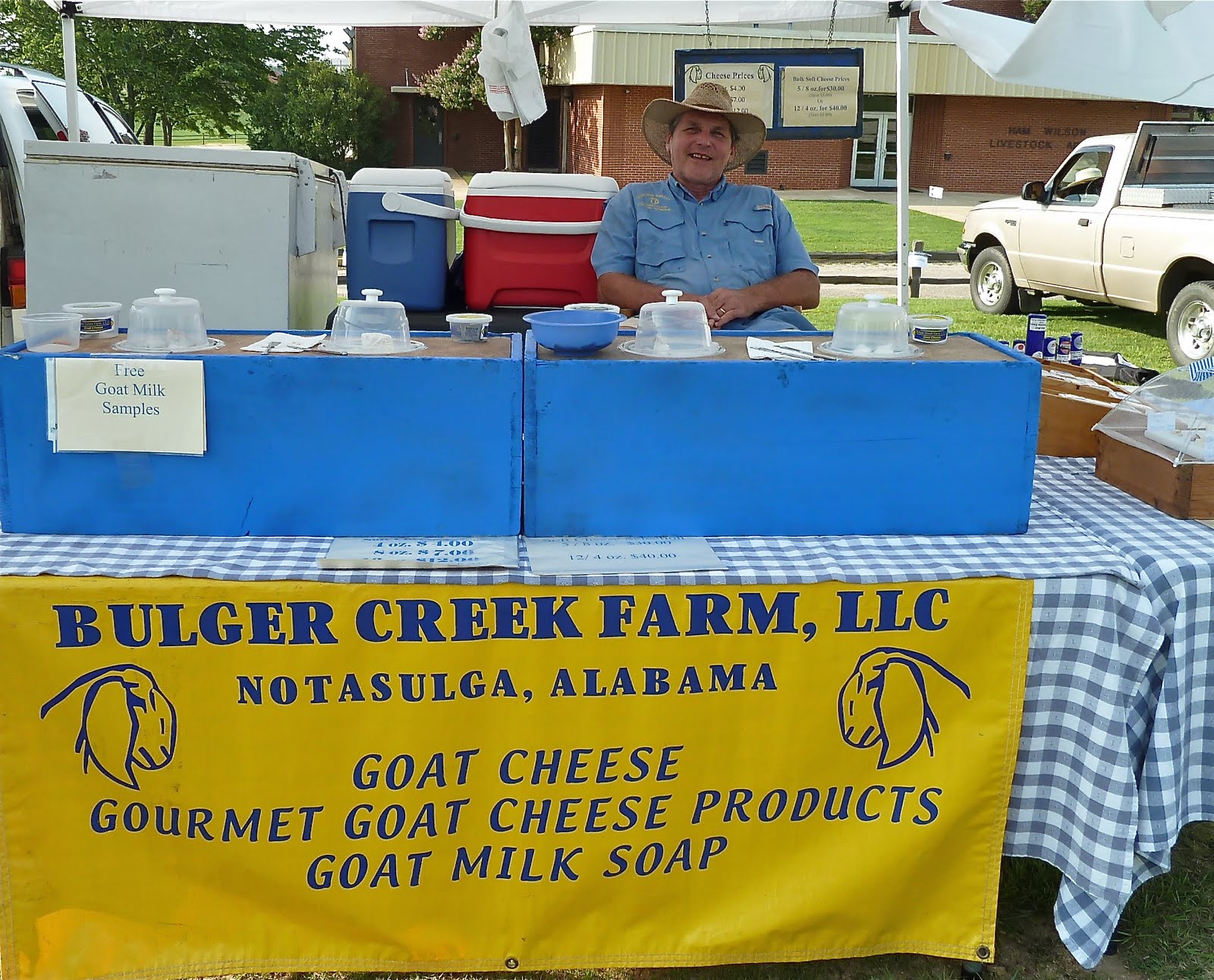
Goat Cheese: Notasulga, Alabama

43.9 miles
Peppers: Fort Mitchell, Alabama

34.7 miles
Tomatoes: Shorter, Alabama

34.7 miles
Pizza Sauce (made from ingredients at the market): Shorter, Alabama

Although not the goal of this specific challenge, we did not notice that our local pizza differed from the conventional in terms of garbage produced. Here’s the breakdown:

Local: Plastic wrap on cheese

Global: Plastic from cheese, plastic from mushrooms, 2 aluminum cans (olives, pizza sauce).

Now, to the question that is on all of your minds: How did the local pizza taste compared to one derived from grocery store ingredients?

Bulger Creek Goat Cheese
Although we found it hard to make straightforward comparisons because the two pizzas we created were so different, we were pleasantly surprised at our local creation.  Our favorite local pizza was the roasted red pepper and goat cheese creation, made possible from a donation from Bulger Creek Farms (you can find them throughout south-central Alabama but we purchase our cheese at Auburn University’s Market at Ag Heritage Park).  Bulger Creek has done a great job of creating goat cheese in diverse forms and tastes, and with the added benefit of being made close to home and made with no preservatives.  Although most of you would probably be apprehensive to leave mozzarella behind, we had our pick of a ricotta-like cheese, goat feta, and even goat cheddar.  All have performed excellent on past pizzas.

To our surprise, we had an unexpected dinner guest that night.  We offered him his choice of the roasted red pepper or potato, eggplant and goat cheddar pizza, while warning him not to expect a traditional New York slice.  Whether he was humoring us or not, he seemed to have enjoyed both as well as the idea of ‘local pizzas’.  I think his preference would have been a meat option, so I was happy to report that the market also had a wide selection of grass-fed meats coming from farms less than 20 miles away.  Although this time we went vegetarian, we do have our eye on the rabbit sausage for a future local pizza!


Sources

Lowe, M. 2011. Global Taco. In: Audubon (July – August), pp. 16. 


Monday, 11 July 2011

Honey versus Sugar: What is More Environmentally Friendly?


This summer I decided to cook, as much as possible, with ingredients provided by local farmers. This goal required replacing some ingredients I have long treated as cooking staples. One of those is sugar. By sugar I mean ‘cane sugar’, which you might know as: granulated sugar, white sugar, brown sugar, or raw cane sugar, among other names. Although there are many alternatives to cane sugar, honey is a sure-fire find at North American farmers markets. This begs the question, how do the environmental impacts compare between sugar and honey production?
The Basics:
Honey available for purchase at the store or market is produced by bees.  These insects make honey after gathering flower nectar.
Cane sugar is produced from a large tropical grass called sugarcane.  This is the same plant that is used to produce molasses, rum, ethanol, and cachaça.


Environmental Costs of Production:
1) Travel Costs: Sugar out-travels honey. Although sugar may be refined in North America, we import most of our sugar from the tropics, primarily South and Central America, Australia, and the Caribbean (some exceptions may occur in the southern United States). Increased travel means increased energy expenditure, in particular fossil fuels. Although you’d have to ask your local farmer for information specific to you, the honey I purchased this week travelled only about 8 kilometers (5 miles). For those of you who can’t find a local honey farmer, make sure to check the label of the honey you purchase at the grocery store.  Most store-bought honey is a mixture of honey from many different countries and may have traveled more than you have!
2) Farming: Sugar production is labor intensive and sugarcane fields are a very inefficient way of using the tropical landscape. Sugarcane demands more pesticides, fertilizers and, most importantly, more water than most other crops. For example, in India’s Mararashtra State, sugarcane is cultivated on only 3% of the land but consumes 80% of the irrigation water used for all crops combined (Shiva 2002). And, India is one of the world’s largest producers of sugar. Farming local honey, on the other hand, requires little space and is also beneficial for surrounding ecosystems.  Honey is either a byproduct of our cultivated crops or comes from unmanaged wildflowers. For example, California almonds depend strictly on bees for pollination.  Interestingly, many Canadian farmers use bees that collect honey from alfalfa or clover plants. Because these wildflowers are also natural soil fertilizers, this means honey production can reduce the need for conventional fertilizers (which are derived from fossil-fuels). 
So far the score is Honey 2, Sugar 0.


3) Processing: Honey has no refining step. It is simply spun out of the frames on your right and then bottled. In comparison, sugarcane is cut (often manually), and transported to an extractor where sugar juice is squeezed out of the plant. At this point it goes through multiple refining steps, such as evaporation, boiling, bleaching (to get white sugar) etc. This processing requires large amounts of heated water and fossil fuels. This means the white granulated sugar on your table has probably originated in a farm in the south - such as Brazil or Cuba – has been sprayed with pesticides, drenched in water, harvested and processed (more water and fuel) and has travelled to a refinery in North America where it is processed again and bleached. All of this energy loss, and I haven’t yet touched upon where all the waste goes during this whole process. 

A superficial look at the environmental impacts of sweeteners shows that honey beats sugar hands down. In my quest to make the switch, I am pleased to report that there have been no failed recipes by replacing sugar with honey. Honey is sweeter than sugar, so my rule of thumb in cooking is to use half as much honey as you would sugar.
I acknowledge that honey is more expensive than refined sugar. But, if it is in your budget, I think it is well worth it to support talented farmers such as Ben, the 82 years-young Beekeeper that produced the honey I purchased last week. By buying local honey, not only are you supporting the few people dedicated to working with these amazing insects, you are also conserving water, reducing CO2 emissions, and preventing more pesticide use and land-clearing in the tropics.

This blog is only just the beginning of many questions related to sweeteners. I have only touched on the social, environmental, and health benefits of beekeeping or the reality of sugarcane expansion in the tropics. Also, I hope to provide some tips from my Winnipeg family, who were avid bee farmers. By the end, some of you may even be motivated to integrate bees into your farms or gardens!

From my time spent in Costa Rica, I must admit I have more experience talking about production of sugar from sugarcane than I do with honey. Although I’ve learned a great deal in my recent switch to local honey, I do welcome any additional comments!
Sources


Shiva, V. 2002. Water Wars: Privatization, Pollution and Profit. South End Press, Cambridge, MA. Pp. 10.